Tell us about the job
Takes about a minute. No obligation.
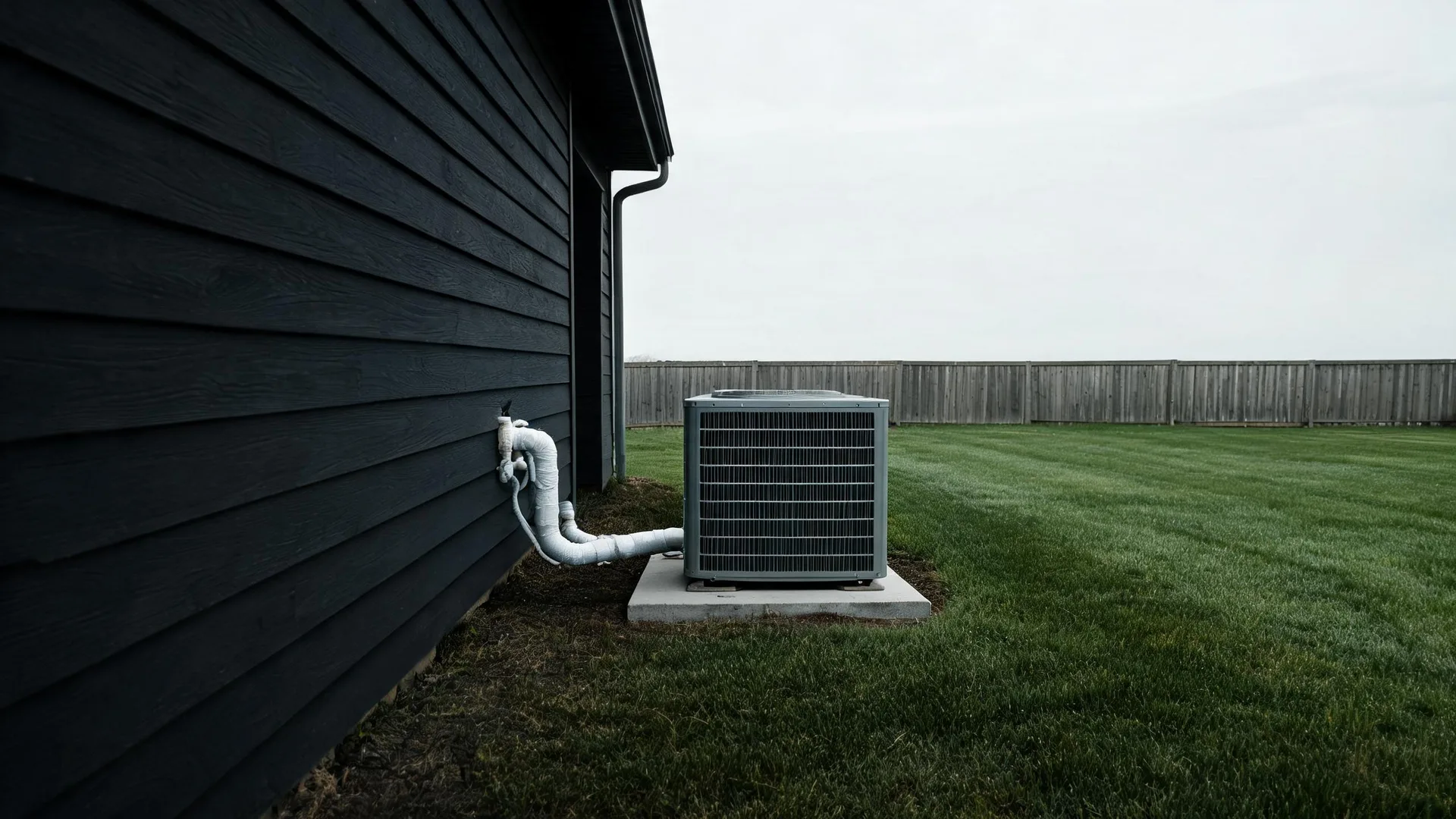
A contractor diagnosing a central AC repair in Yellowstone County starts with the compressor and the contactor, not the thermostat or the filter. Homes in Yellowstone County, MT run cooling about two months a year, from July through August. Every start-stop cycle in that window stresses the compressor windings and the contactor contacts. Because the system sits idle the rest of the year, a small fault from last August stays hidden until the first hot day in July, when the equipment is called on hardest. A contractor will check what the compressor actually draws on startup before pricing anything else.
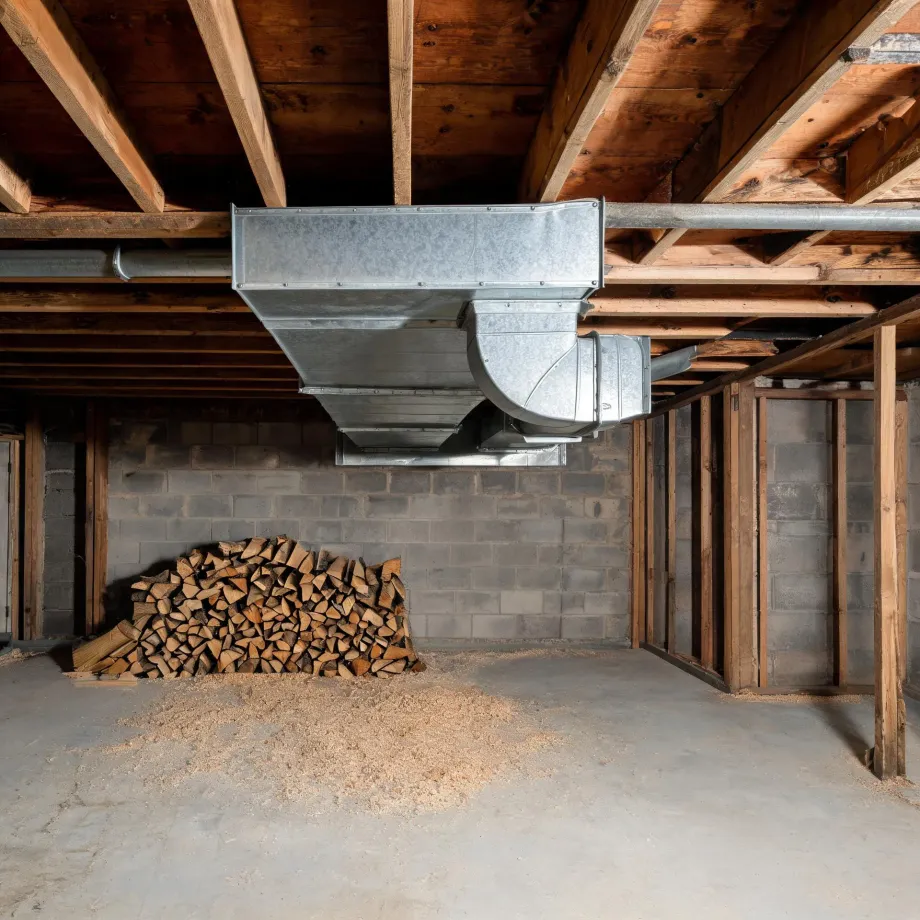
Ductwork put in for one system and adapted for another accumulates a specific kind of wear, the kind a contractor finds at the joints and the plenum rather than inside the air handler. Half the homes in Yellowstone County, Montana were built in 1982 or earlier (2020-2024 ACS 5-year). A unit that has cycled through that stock for years may need a part its manufacturer no longer ships, which changes the job from a swap to a search. That is what shapes the repair scope here, and it shows up once the cabinet is open.
The Parts of a Central AC a Contractor Checks First
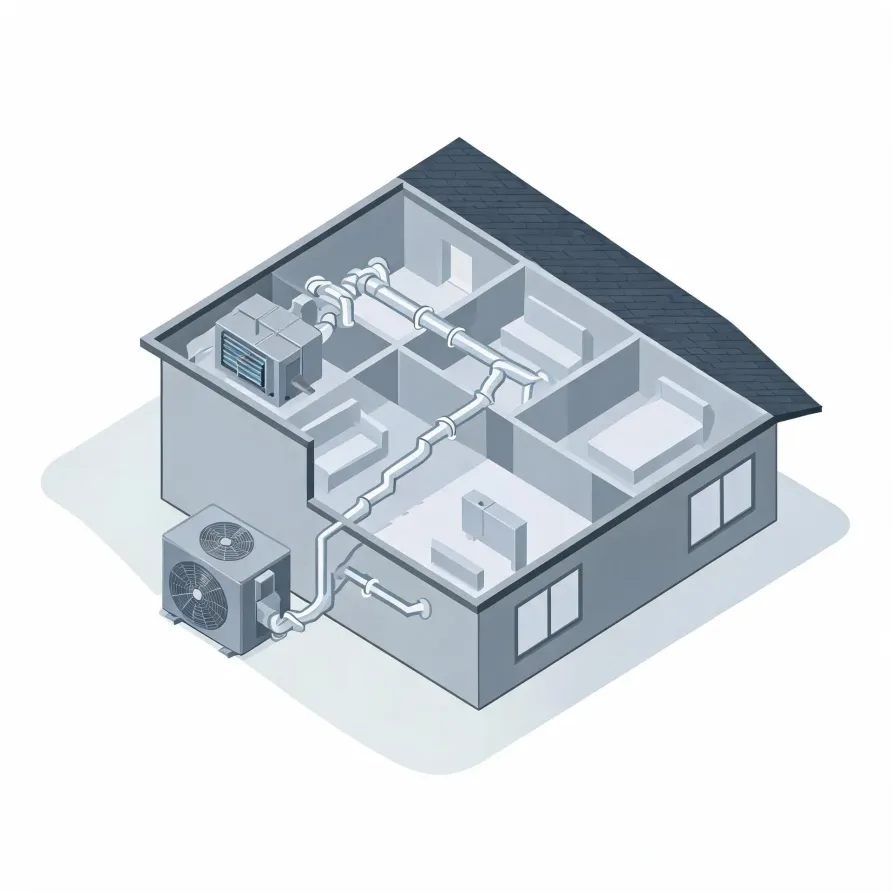
The outdoor condenser unit sits outside the house, usually on a concrete pad at grade, and it is where the system sheds heat to the outside air. The compressor lives inside that cabinet and is one of the first things a contractor looks at when a system stops cooling, runs constantly, or makes noise it should not.
Inside the house, the air handler or furnace holds the evaporator coil, which is where the refrigerant absorbs heat from your indoor air. The refrigerant lines connect the two units, and the thermostat on your wall is the signal the whole system runs on. A fault in any of these, from a coil clogged with buildup to a thermostat reading the wrong temperature, can produce the same symptom at the register.
The drawing shows a typical layout, and a licensed contractor determines which components apply and what the actual condition is in your house.
Find a contractor in Yellowstone CountyYellowstone County, by the numbers
339 severe weather events were recorded in Yellowstone County, Montana between 2015 and 2024.
NOAA National Centers for Environmental Information, Storm Events Database, bulk CSV export, events 2015-01-01 through 2024-12-31.Half the homes in Yellowstone County, Montana were built in 1982 or earlier (2020-2024 ACS 5-year).
U.S. Census Bureau, 2020-2024 American Community Survey 5-Year EstimatesYellowstone County, Montana holds 74,239 housing units (2020-2024 ACS 5-year).
U.S. Census Bureau, 2020-2024 American Community Survey 5-Year EstimatesOwners occupy 69.6% of the occupied homes in Yellowstone County, Montana (2020-2024 ACS 5-year).
U.S. Census Bureau, 2020-2024 American Community Survey 5-Year EstimatesRules & Standards Behind Central AC Repair in Yellowstone County, Montana10 sourced regulations and codes
What the repair visit looks like
Split-system central air conditioners rated below 45,000 Btu/h manufactured on or after January 1, 2023 must meet a federal minimum of 13.4 SEER2.
Split-system central air conditioners rated at or above 45,000 Btu/h manufactured on or after January 1, 2023 must meet a federal minimum of 13.4 SEER2.
Split-system central air conditioners manufactured between January 1, 2015 and December 31, 2022 had to meet 13 SEER, the metric that preceded SEER2.
Single-package central air conditioners manufactured on or after January 1, 2023 must meet a federal minimum of 13.4 SEER2.
Space-constrained central air conditioners manufactured on or after January 1, 2023 must meet a federal minimum of 11.7 SEER2.
Federal efficiency standards for split-system central air conditioners and heat pumps are set on each certified combination of outdoor unit and indoor coil rather than on the outdoor unit alone.
Residential and light commercial air conditioning and heat pump systems assembled in the field, including mini-splits and unitary systems, may not be installed on or after January 1, 2025 using a refrigerant with a global warming potential above 700.
A field-assembled system whose specified components were all manufactured or imported before January 1, 2025 carries no installation compliance date under the refrigerant restrictions and may still be installed.
Licensing and Legal Requirements in Yellowstone County, Montana
Montana’s contractor licence does not reach a casual, minor or inconsequential job whose total price for labour, materials and everything else is less than $2,500 — and the exemption is lost if the work is only part of a larger operation, or if a job is divided up to get under the figure.
Montana requires a current construction contractor licence from the Department of Labor and Industry: an individual or business may not engage in business as a construction contractor without one.
Severe Weather Events in Yellowstone County
Extreme weather puts stress on central AC systems, and that stress compounds over time into worn components and repair calls. How much weather this area sees is a local equipment question, not a general one.
339 severe weather events, 2015–2024. Source: NOAA National Centers for Environmental Information, Storm Events Database.