Send the form and the search for an installer is over.
R-410A is being phased out. New units made from 2025 on use a different refrigerant, and that changes what a contractor can put in your house when your air conditioner needs replacing.
If your AC is old enough that it still runs on R-410A, you don't need to panic about it. The phase-out affects what gets manufactured and installed going forward, not what's already running in your attic or beside your house. An existing R-410A system can still be serviced. But when it's time to replace it, the unit going in will be a new refrigerant system, and that's a different installation than the one your contractor did last time.
Montana summers are hot and dry, and most homes here heat with gas, which means your air conditioner is doing a narrower job than it would somewhere humid. That's worth telling whoever installs your next system. A contractor who knows Montana homes knows how that changes the sizing and the setup, and knows what tends to go wrong with these systems after a Montana winter sitting mostly idle.
Power is cheap here, so the installation decisions that matter most aren't about shaving a few dollars off your electric bill. They're about getting a system that's sized right for a dry heat and installed by someone who's done it before on a house like yours.
When you send the request through this page, it goes to one contractor, not five. Someone licensed, working in Montana, who installs and services this kind of equipment every summer and knows what tends to fail first in these units out here. You won't be fielding calls from a list of companies trying to win your business. You send the details once, and from there finding someone to do the work isn't something you have to keep chasing. It's handled.
From here, the page walks through what the R-410A phase-out actually means for a new installation in your home.
Can I still buy R-410A AC units in Montana?
New R-410A equipment isn't being made anymore, so you're wondering if a Montana contractor can still get one for your home, or install one if your old unit fails this summer.
New R-410A units stopped being manufactured in 2025
Manufacturers stopped building new R-410A air conditioners at the start of 2025 under a federal phase-out, so a contractor can't order one new from the factory anymore. What's left is whatever sits in distributor warehouses, and that stock is going down, not up. Your existing unit isn't affected. It will keep running on R-410A and a contractor can still service it, recharge it, and get parts for it the same as always. The change matters when it's time to replace it, not before. Summers in Montana get hot and dry enough that a working AC isn't optional, so if yours is getting old, it's worth knowing what a contractor would be installing in its place before you're stuck deciding during a heat wave.
Your AC runs fine, the coil is clean, and R-410A still gets serviced the same way it always has.
Once the fins are caked with dirt and the cabinet is corroding, a repair call may turn into a decision about replacement.
R-410A doesn't go into a system the way old R-22 did. It's a blend, so a contractor has to weigh in the exact charge rather than adding a bit at a time. The new refrigerant, R-454B, carries a slight flammability rating, so units built for it have different sensors and leak detection built into the cabinet. That also means the outdoor unit itself is different. The compressor and line set are built around one refrigerant's pressure, so you can't set an R-454B condenser next to an old R-410A coil and expect it to work. If you're replacing the outdoor unit, the indoor coil has to be swapped with it. Servicing an R-454B system also takes separate certification and tools, so the contractor who shows up needs to be set up for it specifically. In Montana, where the condenser runs hard on dry, triple-digit afternoons, getting the refrigerant and charge matched correctly isn't a small detail. It's what decides whether the system holds up through the hottest stretch of summer.
How R-410A and R-454B Differ
R-410A is a blend, so it has to be charged into a system by weight, not topped off a little at a time like the old R-22 systems could be.
A2L refrigerants like R-454B carry a slight flammability rating, so the units built for them use different sensors and leak detection inside the cabinet.
An R-410A outdoor unit and an R-454B outdoor unit aren't interchangeable, because the compressor and the line set are built for a specific refrigerant's pressure.
A contractor working on an R-454B system needs separate certification and tools from what R-410A service has always required.
The indoor coil has to match the outdoor unit's refrigerant, so a full swap means replacing both pieces together, not just the condenser outside.
Dry Montana heat means the condenser coil runs hard on triple-digit days, so matching the refrigerant and charge correctly matters more than it would in a milder climate.
Before you get your air conditioner installationAfter you get your air conditioner installation
Stop chasing an air conditioner pro
One installer gets your project, so there's no bidding war over it.
A unit that's struggling shows it. It runs longer than it used to on a hot, dry afternoon and still doesn't get the house where you want it. You hear it cycle on and off more than it should, or the outdoor fan rattles instead of humming. Maybe the air coming out of the vents feels weaker, or a musty smell shows up when it kicks on. A good contractor checks the charge and the coil before anything else. If the unit is low on R-410A, a leak somewhere is only getting worse, and you're looking at a repair that gets harder to source parts for every year this runs on.
Running clean on the pad it's always had
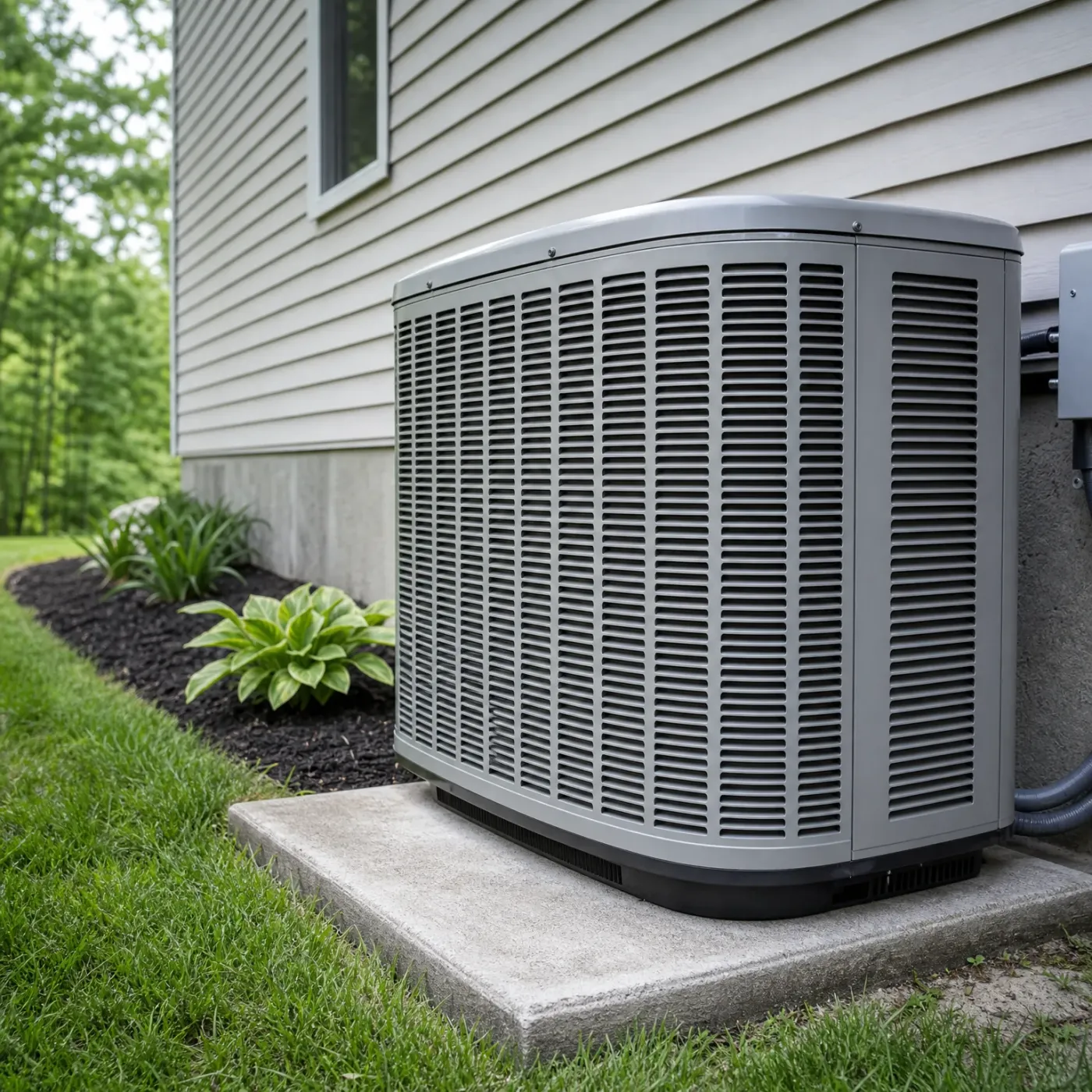
This is a unit doing its job. The coil guard is clear, the disconnect box is wired in tight, and nothing around it hints at strain. An AC like this, kept clean, has no reason to pull you off R-410A before you're ready.
Dirt on the coil guard, age on the cabinet
That buildup on the fins isn't cosmetic. A coil caked like that makes the unit work harder on a hot, dry Montana afternoon, and once corrosion sets in alongside it, a repair call can turn into a replacement decision, R-454B unit and all.
Power costs 12.99 cents per kilowatt-hour statewide
At that rate, running your AC through a hot, dry Montana summer won't wreck your power bill the way it might somewhere else. That matters because a new R-454B unit runs just as cheap to operate as the R-410A one it replaces.
EIA-861 2025 statewide residential average
Why the switch happened at all
R-410A doesn't break down the ozone layer the way the old R-22 did, but it still traps heat in the atmosphere if it leaks out. Regulators set a phase-down schedule years ago, and 2025 is the date manufacturers have to stop building new R-410A equipment. R-454B and the other A2L refrigerants replacing it trap much less heat per pound. None of that changes how your AC cools your house. It changes what's inside the cabinet and what a contractor charges it with.
What stays the same in your house
Swapping refrigerants doesn't mean rerunning your ductwork or rewiring your panel. The line set, the thermostat wiring, and the pad your condenser sits on outside stay put in most installs. What changes is the equipment itself, since an R-454B condenser and coil aren't built the same as the R-410A ones they replace. A contractor working on a Montana home still has to check whether the existing line set and coil can pair with the new unit, or whether both get swapped together.
A National Weather Service summer average puts the dew point at 44°F across homes in Montana. That's dry air by any measure, well below the point where it starts to feel heavy. Your AC still has to pull moisture out of the air it handles, but with dry air coming in, it isn't fighting humidity the way a unit in a wetter state would. Most of the strain on your system here comes from heat itself, not moisture. You'll notice it in how the house feels right after the AC cycles off: dry air loses that sticky feeling fast, even on a hot afternoon.
NASA POWER T2MDEW county cells weighted by homes
Fix the Unit You Have, or Replace It
Repair
If your AC runs on R-410A and a part fails, a local contractor can still get that part and the refrigerant to charge it.
A capacitor, a contactor, a fan motor, these get swapped out the same way they always have, no refrigerant change involved.
Repair keeps you cooling through this summer without the house torn up for a changeover to a new system.
It only makes sense while the rest of the unit, the coil, the compressor, the cabinet, still has years left in it.
A repair bill is a known, smaller cost next to replacing the whole outdoor and indoor unit.
Replace
If the compressor goes or the coil is too far gone, a new unit means a new refrigerant, since R-410A equipment isn't being made anymore.
A new system comes with new parts throughout, so you're not waiting on whether a hard-to-find R-410A part is still in stock.
Replacement is the point to size the unit right for your house, instead of matching whatever was installed last time.
A newer unit's efficiency rating can mean less strain on it during a hot, dry Montana afternoon.
It's a bigger job upfront, with the contractor swapping both the outdoor condenser and the indoor coil to match the new refrigerant.
By nine the sun is finally off the glass, but the upstairs bedroom hasn't let go of the day. The box fan sits in the open window, pulling in air that isn't much cooler than what's already in the room. You can hear the AC running downstairs, it hasn't shut off in a while, and you check the vent by the bed out of habit more than hope. The house is dry, Montana summer dry, so at least it doesn't feel heavy, just hot. Your kid's asleep on top of the sheets instead of under them. You stand there a second, listening to the compressor outside, and go find the thermostat.
R-410A isn't disappearing from Montana homes this year or next. If your unit runs on it now, a contractor can still service it, charge it, and keep it running for as long as the parts hold out. When yours does need to be replaced, the contractor who shows up already works on both kinds of systems, knows which R-454B units handle a dry Montana summer, and won't be the only one you hear from. One licensed, local contractor gets your request, looks at your unit, and tells you straight whether it's a repair or a replacement. No guessing which refrigerant your next system needs or whether someone nearby can even get it. You keep the house comfortable through the heat, and the decision about what goes in that pad outside stays yours to make when the time actually comes.