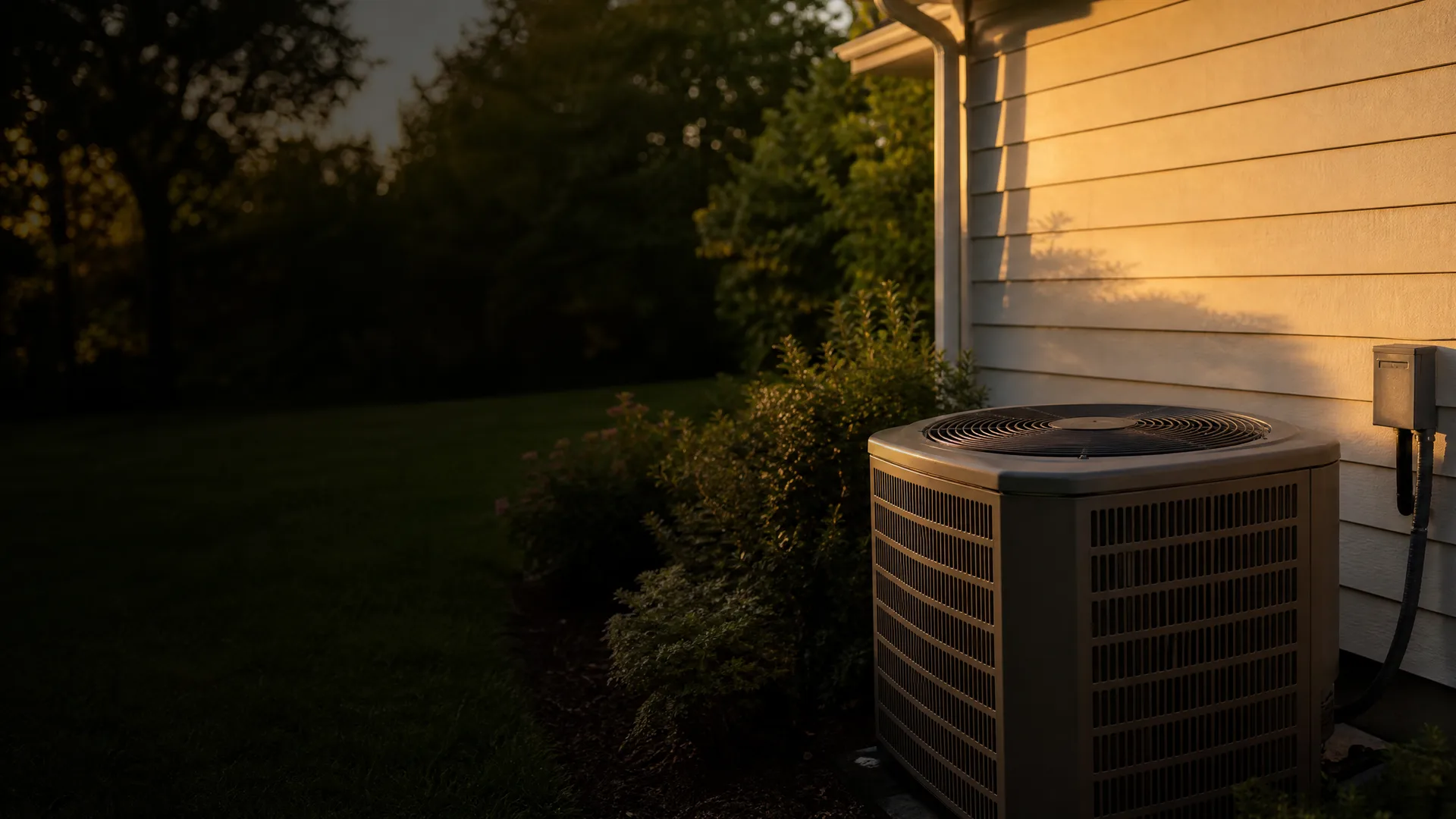
Why your AC compressor won't kick on in Montana

Step 1 of 3: Equipment

A compressor that won't start is usually one of a few things: a tripped breaker, a bad capacitor, a failed contactor, or the unit's own safety switch shutting it down because something upstream isn't right. In Montana's dry heat, outdoor units pull hard on hot afternoons, and a weak capacitor that was limping along in June can give out by August. Low refrigerant from a slow leak will also make a compressor hum or trip off instead of running, since the system senses pressure that's out of range and protects itself. None of this clears on its own. If the outdoor unit is silent, or it hums without starting, or the breaker won't stay reset, the fix is electrical or refrigerant work that needs a licensed hand, not a reset you can do from the thermostat.

A woman with dark hair in a bun reclines on a sofa with her eyes closed, wrapped in a cream fleece blanket, a closed blue hardcover book resting in front of her, with a lit lamp and a vase of dried flowers in the background.
A smiling bearded man in a navy sweater sits at a candlelit dinner table with a glass of red wine, a bowl of salad, and plates of food in the foreground.
Single-story house with gray horizontal lap siding, dark shingled gable roof, a small covered front porch with a dark door, and windows, set behind a patchy green and brown lawn under a clear blue sky.

Montana's summer air is dry. The dew point averages 44°F across June, July and August, which is low enough that the air almost never feels heavy. That matters for your compressor because dry air lets the outdoor unit shed heat fast, so the system isn't fighting moisture the way it would somewhere humid. If the compressor still won't kick on, dryness isn't the cause. That points straight at the electrical side: the capacitor, the contactor, or a breaker that's tripped. Source: NOAA climate normals.

NASA POWER T2MDEW county cells weighted by homes

Two Reasons The Compressor Stays Off

Breaker or capacitor

  • A tripped breaker cuts power to the outdoor unit entirely, so nothing hums or clicks when the thermostat calls for cooling.
  • A bad capacitor keeps the compressor from getting the jolt it needs to start, and you may hear a faint hum before it goes quiet.
  • Both of these show up fast, often within the first hot stretch of the season when the compressor is working hardest.
  • A contractor can test the capacitor with a meter and swap it in the same visit, and reset or replace a breaker that keeps tripping.
  • Dry Montana heat makes the compressor draw more on startup, which is often what finally pushes a weak capacitor past the point of working.

Safety switch shutdown

  • The unit has its own safety switches, and one of them will shut the compressor down rather than let it run into a problem.
  • A low refrigerant charge, a blocked condenser coil, or a failing fan motor can all trigger this kind of shutdown.
  • Unlike a tripped breaker, the system may still power on and the indoor fan may still run, but the compressor itself stays off.
  • This points to something upstream of the compressor, so replacing the capacitor or resetting the breaker won't fix it.
  • Finding which safety switch tripped takes a contractor checking refrigerant pressure, coil condition and airflow in order.
A gray outdoor air conditioner condenser unit on a concrete pad beside a house with horizontal siding and a light stucco wall, with a disconnect box and refrigerant lines on the wall and a shrub and mulch bed at left.

Why heat trips the safety switch

The outdoor unit has a high-pressure switch built into the refrigerant circuit. When the compressor runs on a hot afternoon and airflow across the coil is blocked by dirt or a failing fan motor, pressure climbs past what the switch allows and it cuts power before anything gets damaged. That's why a unit can run fine in the morning and refuse to start by 3 or 4 pm, when the outdoor temperature is highest and the coil has the least room to shed heat.

A gray outdoor air conditioning condenser unit on a concrete pad surrounded by gravel, next to a white horizontal-lap-sided house wall with an electrical box and conduit, against a blank white background on the left.

What the contactor actually does

The contactor is a small switch that sits between the thermostat's low-voltage signal and the 240 volts the compressor needs to run. A thermostat alone can't carry that much current, so it tells the contactor to close, and the contactor passes power to the compressor and condenser fan. Pitted or burned contacts on the contactor can stop that handoff even when the breaker is fine and the capacitor is good, which is why a technician checks it early.

Why does my AC hum but the compressor won't start?

That hum means power is getting to the unit, so the breaker is fine and the contactor is pulling in. What's missing is the jolt that gets the compressor's motor turning. You're hearing the motor try and fail, over and over, which is exactly what a dying part sounds like instead of a dead one.

The capacitor isn't giving the motor the start it needs

A run capacitor stores a charge and releases it to the compressor's motor the instant it's asked to start. When that capacitor weakens, the motor gets power but not enough of a push to overcome its own resistance, so it hums and sits still instead of spinning up. Heat speeds this failure along. Capacitors lose capacity faster at high temperatures, and an outdoor unit baking in a Montana afternoon runs hotter than the air around it. A contractor checks the capacitor's reading against its rating stamped on the side, and if it's off by much, that part gets replaced. Left alone, the motor can overheat trying to start against that hum, and that's a second repair on top of the first.

A smiling man in a dark navy sweater sits on a light sofa in a living room, with a glass bowl of popcorn on a wooden coffee table and bookshelves behind him.
A smiling man in a dark green sweater sits on a tan leather sofa in a dimly lit living room, with a bowl of popcorn in the foreground and a kitchen area blurred behind him.
A smiling middle-aged man in a dark shirt sits on a gray sofa in a living room, with a bowl of popcorn on a side table and shelves, a window and kitchen area behind him.
A smiling bearded man in a dark gray t-shirt sits on a gray couch in a living room, with a large glass bowl of popcorn on a wooden table in the foreground.

Hand off the air conditioner problem

A compressor that stays quiet on a 95 degree afternoon isn't something to leave for later. Montana's dry heat means your indoor temperature climbs fast once the outdoor unit stops doing its job, and a capacitor or contactor that's failed once tends to fail again rather than fix itself. Figuring out which of these it is takes someone who opens up outdoor units in this kind of heat all season, not a guess over the phone. This request goes to one licensed contractor working near you, someone who's seen what Montana summers do to a capacitor or a pressure switch and knows which one to check first. You're not fielding calls from a handful of companies trying to beat each other to your number. You send the details once, and the work of tracking down the right person for your unit stops being something you have to manage yourself.

An outdoor air conditioner condenser unit beside a light-colored lap-sided house with an electrical disconnect box on the wall, surrounded by shrubs and lawn in low evening light.

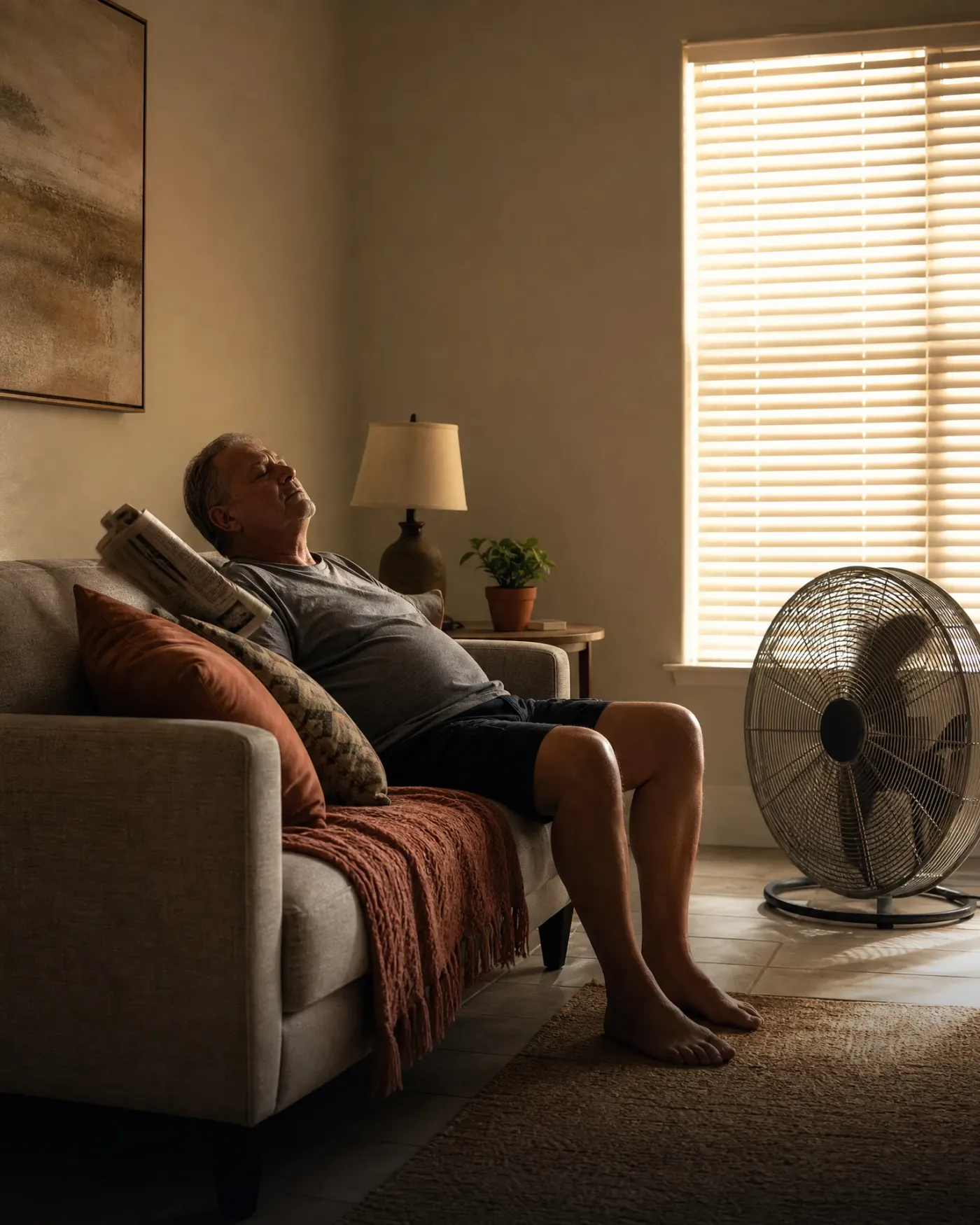
You're out back around seven, watering the tomatoes before the light goes. The air is dry, that flat gold color it gets in August, and it should feel good. It doesn't, because you notice the condenser against the fence isn't making its sound. No hum, no fan turning. You walk over and put your hand near the top grille anyway, like that'll tell you something. Inside, the thermostat still reads the number you set it to that morning, climbing past it now. Your dog is lying flat on the kitchen tile, the spot that's usually coolest in the house. You stand there a minute, listening for the thing to kick on, before you go find your phone.

An outdoor air conditioning condenser unit on a concrete pad beside a house with horizontal lap siding, with a gray electrical disconnect box and conduit on the wall, mulch bed and shrub to the right, and mown grass in the foreground.
This is what a compressor that starts clean looks like, nothing blocking the coil or crowding the cabinet.
An outdoor air conditioning condenser unit on a concrete pad beside a house with light blue horizontal siding, with a shrub to the left and a conduit and disconnect box on the wall to the right.
Coil guards packed with dust and debris choke airflow, and that's often what trips the safety switch before the compressor ever starts.

The compressor is the last part in line. Power has to pass through the thermostat, the control board and the contactor before it ever reaches the compressor itself, so a failure anywhere earlier in that chain looks the same from your living room: nothing happens outside. Once the contactor closes, the run capacitor has to deliver its charge in one jolt, because the compressor is starting against refrigerant pressure that never fully drops off between cycles. That jolt is the hard part. A capacitor losing its charge over time will manage it some days and not others, which is why the unit sometimes runs fine and sometimes doesn't. The contactor itself is just two copper contacts closing against each other, and every cycle arcs them a little more until they're too pitted to connect. The high-pressure switch is watching the refrigerant circuit the whole time, and it will cut power rather than let the compressor run against pressure that's climbed too high. None of these parts tend to fail cleanly the first time. A compressor that hesitated last week is telling you something about this week.

How the compressor actually starts

  • The compressor is the last thing in the startup sequence, so it only gets power once the thermostat, the control board, and the contactor have all done their part.
  • A run capacitor stores a charge and releases it in one jolt, and that jolt is what gets the compressor's motor spinning against the pressure already in the system.
  • The contactor is a simple switch with two copper contacts, and years of arcing each time it closes can pit them until they stop making contact at all.
  • Refrigerant pressure doesn't drop to zero between cycles, so the compressor has to start against real resistance every single time it kicks on.
  • The high-pressure switch sits inline on the refrigerant circuit and will cut power to the compressor before anything inside it gets damaged by excess pressure.
  • A failing start component often shows itself the same way more than once, so a compressor that struggled to start last month is more likely to fail outright this month.
An outdoor air conditioner condenser unit on a concrete pad beside a house with light gray horizontal siding, with mulch and green shrubs on either side and a concrete walkway in the foreground.
Before you get your air conditioner repair
A gray outdoor air conditioning condenser unit on a concrete pad beside a house with horizontal siding and a stone veneer base, with refrigerant line and electrical disconnect box on the wall and flowering shrubs to the left.
After you get your air conditioner repair
A gray outdoor air conditioner condenser unit on a concrete pad beside a house with horizontal vinyl siding, surrounded by mulch, flowering shrubs, and lawn.

Clear coil, clean start

This condenser has open fins and bare mulch around it, nothing crowding the cabinet. Air pulls through the coil without resistance, so the compressor starts on the first call and the pressure switch never has a reason to step in.

A weathered outdoor air conditioning condenser unit on a concrete pad beside a house with light horizontal siding, an electrical disconnect box and conduit on the wall, and mulched soil on either side.

A coil caked with grime

Dirt and debris have packed into the cage and coil fins on this one. Airflow across the coil drops, pressure in the refrigerant circuit climbs on a hot afternoon, and the safety switch can cut the compressor before it ever gets going.

Power costs 12.99 cents per kilowatt-hour statewide

At 12.99 cents a kilowatt-hour, running a struggling compressor costs you less here than it would almost anywhere else. That's not a reason to let a hard-starting unit keep trying and failing. Each attempt stresses the same capacitor or contactor that's already on its way out.

EIA-861 2025 statewide residential average

Where this leaves you

  • A quiet outdoor unit on a hot afternoon traces back to a tripped breaker, a bad capacitor, a failed contactor, or a safety switch doing its job.
  • Dirty coil fins and dry Montana heat push pressures higher than they'd climb in damp air, so the switch trips sooner here.
  • Each failed start puts the same load on a capacitor or contactor that's already struggling, so the problem rarely fixes itself.
  • A local contractor who services this equipment every summer already knows which of these parts tends to go first in this heat.
  • Sending one request means one licensed contractor looks at your unit, not a handful of companies competing for the job.
  • Once you know which of these it is, the fix is usually quick and the unit is back to cooling the same day.

A compressor that won't start almost always comes down to one of four things: a tripped breaker, a bad capacitor, a failed contactor, or a safety switch that tripped because heat and a dirty coil pushed pressures too high. Montana's dry summer air makes that last one more likely than it would be somewhere damp, since the unit is already working against higher pressures before anything goes wrong. None of these fix themselves. A capacitor that's weakening gets weaker with every attempt the compressor makes to start, and a contactor with pitted contacts doesn't heal between cycles. The unit either keeps trying and stressing the same worn part, or the switch keeps shutting it down before it gets the chance.

What helps most at this point isn't more guessing, it's someone who's seen this exact failure before. A contractor who works on air conditioners through a Montana summer has already replaced capacitors and contactors that gave out under this kind of heat, and knows which one tends to go first on a unit that hums but won't start versus one that stays silent. That's the difference between someone diagnosing from scratch and someone who already has a short list in mind before they open the cabinet.

Sending a request through this page puts one licensed, local contractor on your unit. Not three companies calling within the hour, not a bidding war. One person who knows this equipment, looking at your compressor, in a Montana summer, with a clear idea of where to start.

A lit ceramic table lamp with a linen shade sits on a round wooden side table with a small vase of greenery and a dark shallow bowl, beside a beige upholstered sofa with a cushion and knit throw, below a framed artwork on a pale wall.
Corner of a beige linen sofa with a large woven cushion and a fringed knit throw, beside a potted leafy tree in a woven basket against a neutral wall.
Sunlit interior corner with a wood-framed armchair with beige cushions and a striped pillow, a leafy plant in a tall ceramic pot, a window with wood sill showing green foliage outside, and dark wood flooring.
A lit black path light beside a stone walkway leading to a dark front door of a white clapboard house, with shrubs and flowering plants in the bed at dusk.
A covered porch at dusk with a wooden front door, a lit lantern wall sconce on gray horizontal siding, a black rocking chair with a cream throw, a potted white flowering plant, a coir doormat, and a window showing a lit interior lamp.

Send one request and you're done looking

Your request stays with one local pro.

Send my request

No charge to send it. You decide if you hire them.